
Ophthalmic Refraction Unit
A Semi-Automatic Ophthalmic Refraction Unit is a medical device used by eye care professionals, such as optometrists and ophthalmologists, to conduct refraction tests to determine the refractive error (such as nearsightedness, farsightedness, and astigmatism) of a patient's eyes. These units are typically used for diagnosing visual acuity and prescribing corrective lenses. Key Components of a Semi-Automatic Ophthalmic Refraction Unit :
- Phoropter or Refractor Head : This is the main component used to test the patient's vision. It contains lenses of varying strengths, which are manually or semi-automatically adjusted to present different lens options to the patient.
- Volume production capacity.
- Computerized Control System : Unlike fully manual systems, a semi-automatic unit has some electronic or computerized controls to adjust the lenses or settings, reducing the manual workload. The user might control these settings through buttons or a touch screen.
- Chart Projector : This projects eye charts (like Snellen charts) onto a screen for the patient to read. The charts help in determining the visual acuity and checking for any potential vision issues.
- Visual Acuity Testing: The system is designed to display different visual charts for both near and distant vision tests.
- Auto-Refraction Function (Optional) : Some semi-automatic units may have an auto-refraction feature that takes a preliminary reading of the refractive error. While not fully automated, this feature can be a helpful tool to quickly assess a patient's vision and provide a starting point for further tests.
- Patient Positioning System : Ensures that the patient is correctly positioned in front of the phoropter, and that the alignment for testing is optimal.
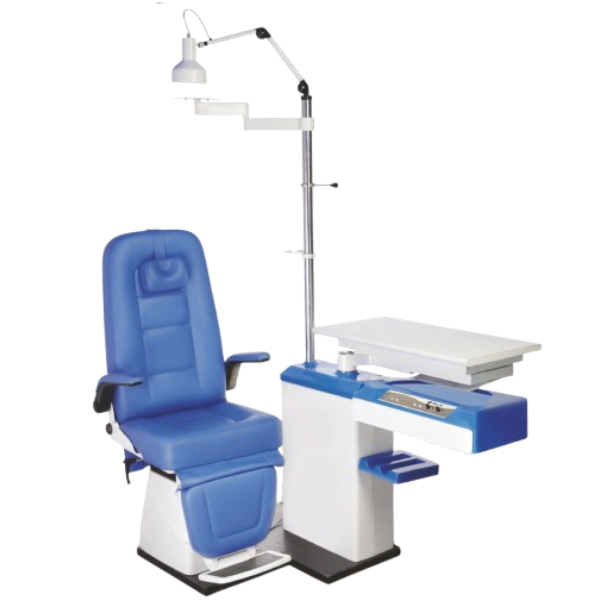
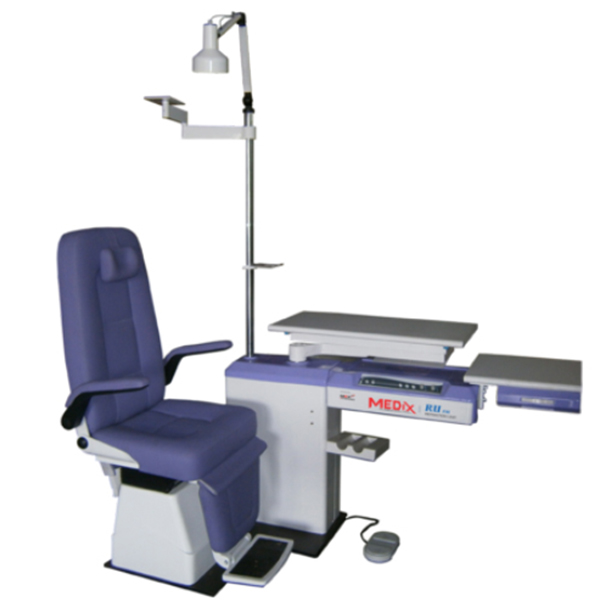
Benefits
- Increased Efficiency : Semi-automatic units reduce the time required for manual adjustments and settings, making the refraction process faster.
- Improved Precision : Automation in lens adjustments can increase the accuracy and consistency of the refraction tests.
- Enhanced Patient Comfort : With fewer manual adjustments required, patients are subjected to fewer changes during the test, increasing their comfort level.
- Ease of Use : These units are easier to operate compared to fully manual systems due to the incorporation of semi-automatic controls and digital systems.
- Cost Effective : They are more affordable than fully automatic refraction systems, while still providing many of the benefits of automation.
Applications
- Routine Eye Examinations : Used in optometric and ophthalmic practices to assess a patient's refractive error.
- Pre-Screening : Some units include auto-refractors that help to screen patients before the eye examination, saving time.
- Pediatric and Geriatric Testing : They are useful for both children and elderly patients who may have difficulty with traditional manual tests.
- Conclusion: A semi-automatic ophthalmic refraction unit strikes a balance between the speed and accuracy of fully automated systems and the flexibility and familiarity of manual testing. It is a valuable tool for optometrists and ophthalmologists, helping to deliver quicker, more reliable results for refraction assessments.